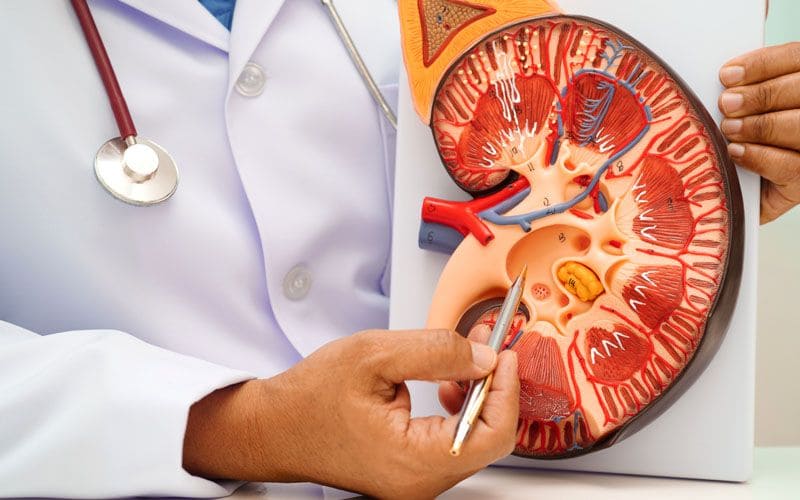
Kidney Stone Treatment – Expert Diagnosis & Advanced Stone Removal
Kidney Stone Treatment
Kidney stones are hard mineral and salt deposits that form inside the kidneys due to the crystallization of substances normally present in urine. Stones can vary in size, from tiny crystals that pass naturally to larger stones that obstruct the urinary tract and require medical intervention.
Kidney stones can cause severe pain, blood in the urine, urinary tract infections, and blockage of urine flow. Early diagnosis and appropriate treatment help relieve symptoms, preserve kidney function, and prevent complications.
Dr. Sunit offers comprehensive evaluation and advanced treatment for kidney, ureter, and bladder stones using the latest minimally invasive techniques.
What are Kidney Stones?
Kidney stones develop when minerals such as calcium, oxalate, uric acid, or cystine become concentrated in the urine and form crystals. Over time, these crystals grow into stones that may remain in the kidney or move into the ureter, causing pain and urinary obstruction.
Some stones pass naturally, while others require medical or surgical treatment depending on their size, location, and associated symptoms.
Common Symptoms
Patients with kidney stones may experience:
- Severe pain in the back, side, or lower abdomen
- Pain radiating to the groin
- Burning sensation while urinating
- Blood in the urine (Haematuria)
- Frequent urge to urinate
- Nausea and vomiting
- Fever and chills (if infection is present)
- Difficulty passing urine
- Cloudy or foul-smelling urine
Common Causes
Kidney stones may develop due to:
- Inadequate water intake (dehydration)
- High salt intake
- Diet rich in oxalate or animal protein
- Family history of kidney stones
- Obesity
- Recurrent urinary tract infections
- Certain metabolic disorders
- Hyperparathyroidism
- Gout and high uric acid levels
- Certain medications
Types of Kidney Stones
The most common types include:
- Calcium stones
- Uric acid stones
- Struvite (infection) stones
- Cystine stones
Identifying the type of stone helps determine the most effective treatment and preventive measures.
Diagnosis
A thorough evaluation helps determine the size, location, and composition of the stone.
Diagnostic tests may include:
- Medical history and physical examination
- Urine routine and microscopic examination
- Urine culture
- Blood investigations
- Ultrasound of the kidneys, ureters, and bladder (KUB)
- X-ray KUB (when appropriate)
- Non-contrast CT scan (NCCT KUB)
- Stone analysis after removal or passage
- Metabolic evaluation for recurrent stone formers
Treatment Options
Treatment depends on the stone's size, location, symptoms, and overall kidney function.
1. Medical Management
Small stones may pass naturally with:
- Increased fluid intake
- Pain-relieving medications
- Medications to relax the ureter (Medical Expulsive Therapy)
- Antibiotics if infection is present
2. Extracorporeal Shock Wave Lithotripsy (ESWL)
ESWL uses focused shock waves to break kidney stones into smaller fragments that can pass naturally through the urinary tract. It is suitable for selected kidney and upper ureteric stones.
3. Ureteroscopy (URS) with Laser Lithotripsy
A thin endoscope is passed through the natural urinary passage to locate and fragment ureteric or kidney stones using a high-powered laser. No external incision is required, making recovery faster and less painful.
4. Retrograde Intrarenal Surgery (RIRS)
RIRS is a minimally invasive procedure performed using a flexible ureteroscope and laser technology to treat kidney stones without any skin incision. It is highly effective for small to medium-sized kidney stones.
5. Percutaneous Nephrolithotomy (PCNL)
PCNL is recommended for large or complex kidney stones. A small incision is made in the back to access the kidney directly, allowing complete stone removal with minimal trauma compared to open surgery.
6. Laparoscopic or Open Stone Surgery
In rare and complex cases where minimally invasive methods are not suitable, laparoscopic or open surgery may be required.
Prevention of Kidney Stones
Preventive measures include:
- Drinking adequate water throughout the day
- Limiting salt intake
- Maintaining a balanced diet
- Reducing excessive animal protein intake
- Managing uric acid levels
- Following dietary advice based on stone composition
- Regular follow-up for recurrent stone disease
When Should You See a Urologist?
Consult a urologist if you experience:
- Severe pain in the back or side
- Blood in the urine
- Recurrent kidney stones
- Fever with urinary symptoms
- Difficulty passing urine
- Persistent nausea or vomiting
- Recurrent urinary tract infections
- Known kidney stones with increasing pain
Prompt evaluation helps prevent kidney damage and serious complications.
Expert Kidney Stone Care
Dr. Sunit provides comprehensive diagnosis and advanced treatment for kidney stone disease using modern imaging, laser technology, and minimally invasive surgical techniques. Every patient receives an individualized treatment plan focused on complete stone clearance, pain relief, preservation of kidney function, and long-term prevention of stone recurrence for lasting urinary health.
Confidential Consultation
Discuss treatment options directly on WhatsApp or book an appointment.